Decolonization was documented by the people who fought for it — on fliers, placards and broadsides. These are originals, kept by the Smithsonian National Museum of African American History and Culture and released into the public domain. Every piece is credited to its record.
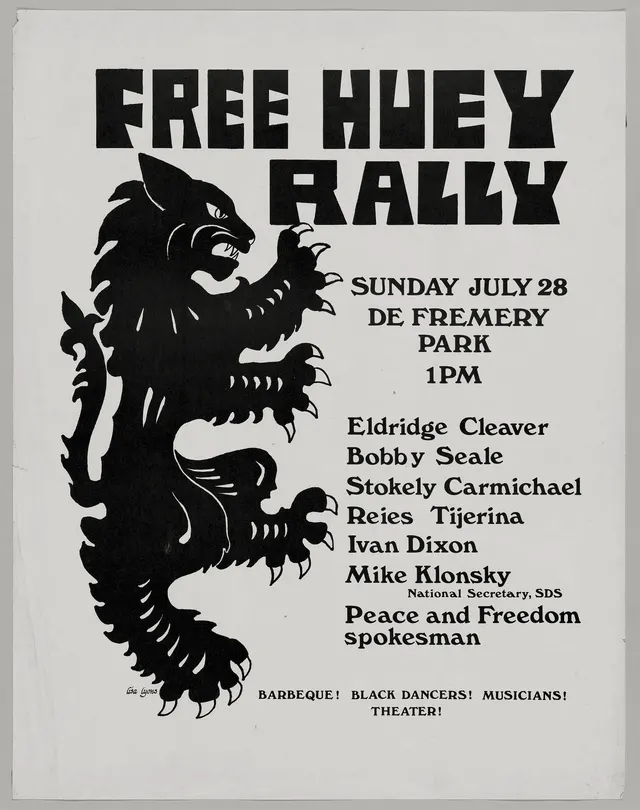
When Black Panther Party co-founder Huey P. Newton stood trial in 1968, the party turned his defense into a national campaign. This poster calls supporters to a Free Huey rally at De Fremery Park in Oakland — with Eldridge Cleaver, Bobby Seale and Stokely Carmichael among the billed speakers.
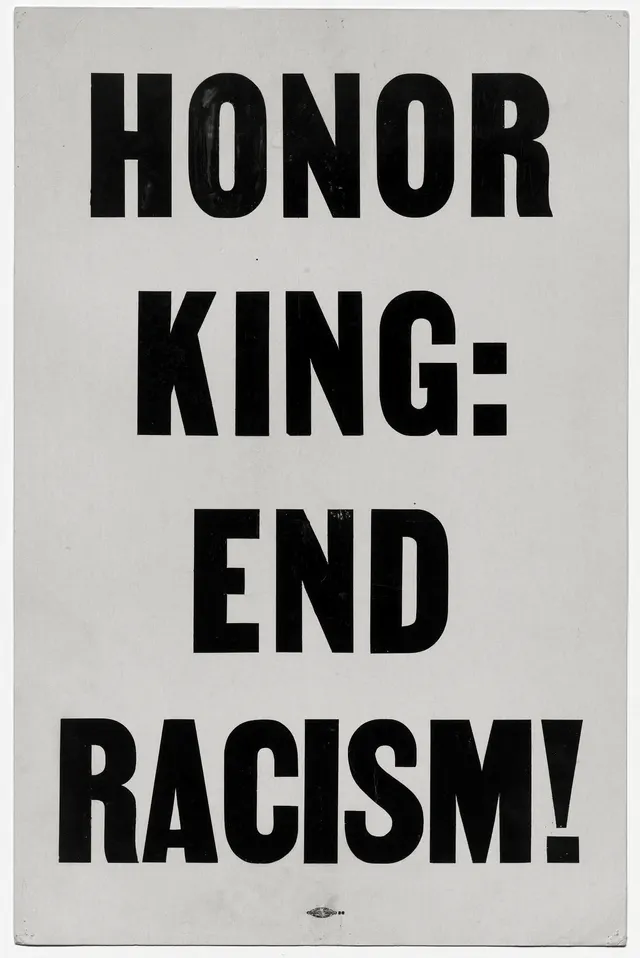
Dr. Martin Luther King Jr. came to Memphis to stand with the city's striking Black sanitation workers, and was assassinated there on April 4, 1968. Days later, marchers carried placards like this one through Memphis alongside the strike's famous I AM A MAN signs.
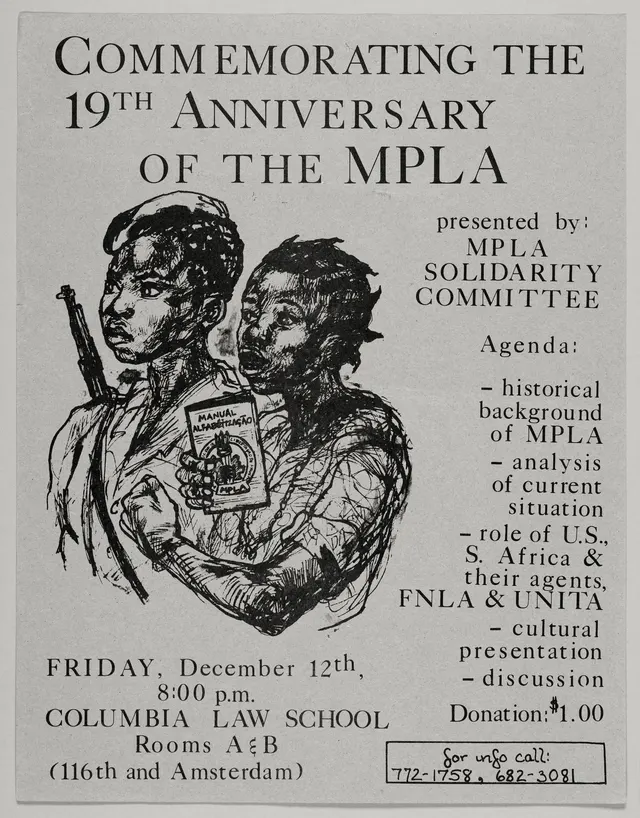
Weeks after Angola declared independence from Portugal in November 1975, New York solidarity organizers marked nineteen years of the MPLA, the movement that had fought the colonial war. The program promised a history of the struggle and an analysis of the forces still ranged against it — including the United States, apartheid South Africa, and the rival FNLA and UNITA.
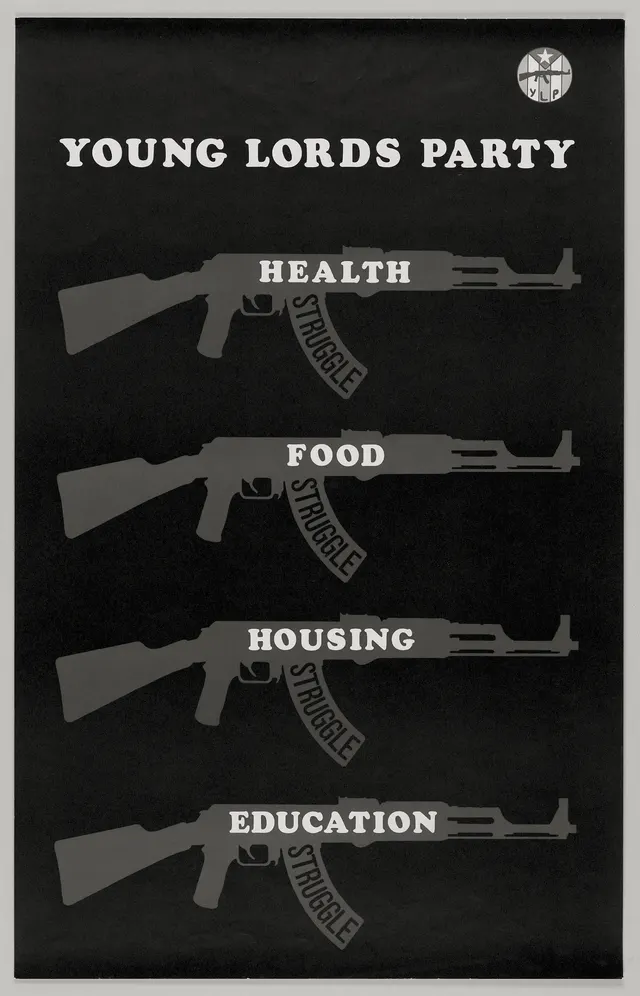
Young Lords Party: Health, Food, Housing, Education, c. 1971 · NMAAHC 2018.35.3 · CC0
Young Lords Party: Health, Food, Housing, Education
c. 1971 · self-determination · community-organizing
The Young Lords grew from a Chicago street organization into a revolutionary party of Puerto Rican youth, running free-breakfast programs and health clinics in New York while demanding self-determination for Puerto Rico. This poster renders their platform — health, food, housing, education — as the weapons of the struggle.
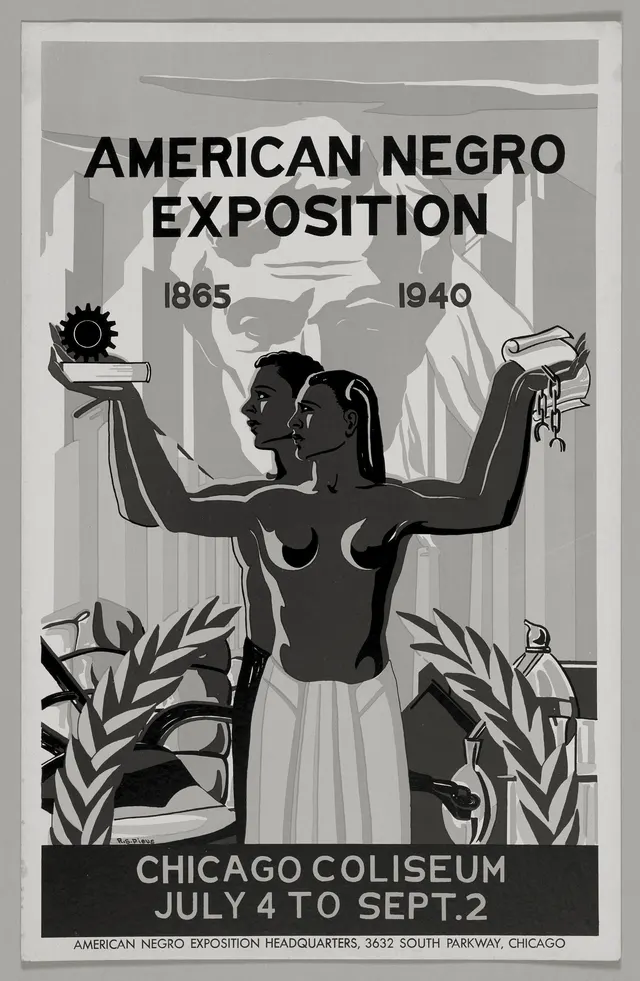
American Negro Exposition poster, 1940 · NMAAHC 2015.178 · CC0
American Negro Exposition poster
1940 · black-achievement · public-memory
Chicago's American Negro Exposition of 1940 marked seventy-five years since emancipation with a Black-organized fair of art, science, industry and history — Black achievement presented on Black terms, decades before mainstream institutions would make room for it.
For the Good of America (NAACP broadside), 1922 · NMAAHC 2011.57.9 · CC0
For the Good of America (NAACP broadside)
1922 · anti-lynching · documentation
The NAACP bought newspaper space to publish the arithmetic of lynching — 3,436 people killed between 1889 and 1922 — while pressing for the Dyer Anti-Lynching Bill, which passed the House only to die by filibuster in the Senate. Publishing the receipts is an old tactic; this site stands in that lineage.
The collection is deliberately small and grows slowly. Every piece is CC0 — dedicated to the public domain by the museum that holds it — and every credit line names the accession, because provenance is the point.